
Crypto 101
Cryptocurrency (crypto) is a type of digital money that uses blockchain technology to record and secure transactions. Unlike traditional currencies such as the U.S. dollar or euro, crypto is usually decentralized, meaning it isn’t controlled by a government or central bank.
The most well-known example is Bitcoin, created in 2009, followed by thousands of others like Ethereum, Binance Coin, and Solana. People use crypto for payments, trading, investing, and powering decentralized applications (DeFi). Prices can change very quickly, making crypto both an exciting opportunity and a risky investment.

Grow Your Vision
Cryptocurrency has grown into a massive global market, now valued at nearly $4 trillion. Daily trading volumes often reach hundreds of billions of dollars, with Coinbase alone reporting about $268 billion, showing just how liquid and active the space is.
More than 560 million people worldwide now own crypto, and the number of crypto millionaires has nearly doubled in the past year to around 172,300, fueled by rising prices and institutional interest.
For many investors, crypto represents a long-term opportunity especially for those who hold through bull cycles when prices surge. While it’s highly volatile, the growing adoption of crypto continues to create new pathways for wealth building and innovation.

What Is Cryptocurrency
Cryptocurrency is often called the “fourth asset class,” alongside stocks, bonds, and real estate, because it introduces a new way to store and transfer value. Unlike fiat money (like dollars or euros), which governments can print endlessly sometimes leading to inflation or crises like the 2008 financial meltdown crypto runs on a set of fixed rules built into its blockchain.
A blockchain is like a digital ledger that records every transaction transparently, with no single authority in charge. Instead, transactions are verified by validators (computers around the world) that follow the same protocol, or rulebook, to confirm blocks of transactions.
This design makes crypto more resistant to manipulation, creates trust without banks, and offers a potential solution to problems caused by unlimited money printing and centralized control in the fiat system.
Crypto History
The history of cryptocurrency begins in 2009 with the launch of Bitcoin, created by the mysterious figure (or group) known as Satoshi Nakamoto. Satoshi’s whitepaper introduced Bitcoin as “peer-to-peer electronic cash,” designed to solve the flaws of the fiat system exposed during the 2008 financial crisis such as excessive money printing, central bank control, and lack of transparency.
Bitcoin’s innovation was the blockchain, a decentralized ledger that allowed people to send and verify transactions without banks or governments. In its early years, Bitcoin was used mainly by tech enthusiasts and early adopters, famously including the first real-world transaction in 2010 when 10,000 BTC was used to buy two pizzas.
Soon after, other cryptocurrencies or altcoins emerged, each aiming to improve or expand on Bitcoin’s model. Litecoin (2011) offered faster transactions, Ripple (2012) focused on banking payments, and Ethereum (2015) introduced smart contracts, opening the door for decentralized finance (DeFi), NFTs, and Web3 applications.
Since then, the crypto ecosystem has exploded into thousands of coins and tokens, with Bitcoin and Ethereum leading the market, while new innovations like Solana, Cardano, and layer-2 scaling solutions continue to push the industry forward.
From a fringe experiment to a $4 trillion asset class, crypto has evolved into one of the most disruptive financial technologies of the modern era.
Crypto 101 Timeline
2008 – Bitcoin Whitepaper Released
Satoshi Nakamoto publishes the Bitcoin whitepaper, introducing the concept of peer-to-peer digital cash and solving problems of trust and centralization in the traditional financial system.
2009 – Bitcoin Launch
The first Bitcoin block (“Genesis Block”) is mined. Bitcoin begins circulating, mostly among tech enthusiasts and early adopters.
2010 – First Real-World Bitcoin Transaction
10,000 BTC is used to buy two pizzas, marking the first documented commercial Bitcoin transaction.
2011 – Litecoin & Early Altcoins
Litecoin is launched, offering faster transactions. Other early altcoins emerge, experimenting with improved security, speed, and utility.
2012–2013 – Growth of Bitcoin and Other Altcoins
Ripple and Namecoin gain attention. Bitcoin starts attracting mainstream media coverage and early investors.
2015 – Ethereum Launch
Ethereum introduces smart contracts, allowing decentralized applications (dApps) and DeFi platforms, expanding blockchain use beyond currency.
2017 – ICO Boom
Thousands of new tokens and coins are launched through Initial Coin Offerings (ICOs). Market cap grows dramatically, introducing millions to crypto investing.
2018–2019 – Market Correction & Regulation Begins
Prices crash after the 2017 bull run. Governments start implementing clearer rules and regulations for crypto trading and taxation.
2020–2021 – Institutional Adoption & DeFi Surge
-
Bitcoin and Ethereum see massive adoption. DeFi protocols, NFTs, and layer-2 solutions boom. Companies like Tesla, MicroStrategy, and major banks begin investing.
2022–2025 – Market Maturation
-
Total crypto market cap reaches around $4 trillion. More than 560 million people globally own crypto. Layer-1 blockchains (Ethereum, Solana, Cardano) and layer-2 scaling solutions continue to expand usage. Crypto becomes recognized as a 4th asset class alongside stocks, bonds, and real estate.
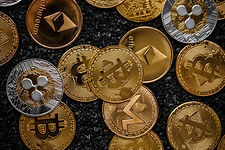
Major Cryptocurrencies
BTC - Bitcoin
Bitcoin (BTC) is the first and most well-known cryptocurrency, created in 2009 by the mysterious figure (or group) known as Satoshi Nakamoto.
It was designed as a peer-to-peer digital cash system that doesn’t rely on banks or governments, offering a solution to problems in the traditional fiat system, like excessive money printing and centralized control.
Bitcoin transactions are recorded on a decentralized blockchain, which is a secure, transparent ledger maintained by a global network of computers called miners or validators.
Bitcoin has a fixed supply of 21 million coins, which makes it scarce and often compared to digital gold.
Early on, it was used mainly by tech enthusiasts; famously, 10,000 BTC bought two pizzas in 2010, a transaction now celebrated as Bitcoin Pizza Day.
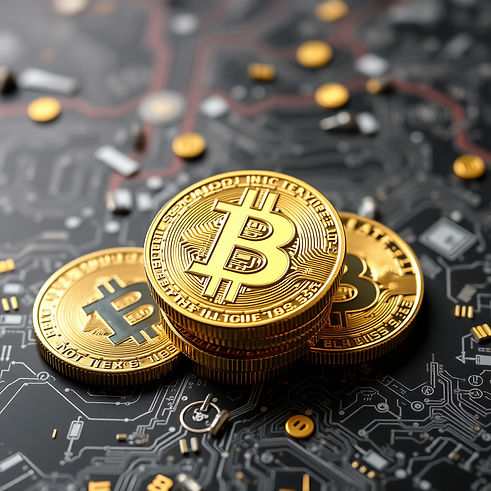

ETH - Ethereum
Ethereum (ETH) is the second-largest cryptocurrency by market capitalization, launched in 2015 by Vitalik Buterin and a team of developers. Unlike Bitcoin, which was designed primarily as digital money, Ethereum was created as a platform for decentralized applications (dApps) and smart contracts, which are self-executing agreements that run automatically when certain conditions are met.
Its blockchain allows developers to build projects ranging from DeFi protocols and NFTs to games and enterprise solutions, making it a cornerstone of the decentralized web (Web3). As of September 2025, Ether trades around $4,295 USD, with a market capitalization of approximately $518.6 billion and a circulating supply of 120.7 million ETH.
Daily trading volumes often reach $31 billion, and Ether recently hit an all-time high of $4,955. Ether is used to pay for transactions and computational services on the Ethereum network, and ongoing upgrades like the upcoming Fusaka upgrade aim to improve scalability and reduce gas fees.
With its broad adoption, programmability, and active developer community, Ethereum remains a major player in the crypto ecosystem.
EVN - Etherum Virtual Network
The Ethereum Virtual Machine (EVM) is the computational engine that runs on the Ethereum blockchain.
It allows anyone to create and execute smart contracts and decentralized applications (dApps) in a secure, decentralized environment.
Think of it as a world computer: every Ethereum node runs the EVM, ensuring that all transactions and contract executions are verified consistently across the network.
XRP - Ripple
XRP, the native cryptocurrency of the Ripple network, was launched in 2012 by Ripple Labs, a financial technology company based in San Francisco, California.
Unlike Bitcoin, which was designed primarily as digital money, XRP was created to facilitate fast and low-cost cross-border payments between banks and financial institutions, with transactions settling in seconds compared to minutes or even hours for traditional banking or Bitcoin.
As of September 9, 2025, XRP trades at around $2.96 USD, with a market capitalization of approximately $150 billion, a circulating supply of 50.5 billion XRP, a 24-hour trading volume near $10.2 billion, and an all-time high of $3.84 USD on July 18, 2025.
Ripple has forged numerous global partnerships to expand adoption, including collaborations with over 10 governments—such as Colombia, Georgia, Montenegro, and Palau—to develop central bank digital currencies (CBDCs), and integration with several U.S. banks for international payments.
Additionally, Ripple announced its acquisition of the prime brokerage firm Hidden Road for $1.25 billion, aiming to accelerate digital asset adoption using XRP’s technology.
XRP Ledger
The XRP Ledger (XRPL) is the decentralized blockchain that powers XRP and enables fast, secure, and low-cost transactions. Unlike some blockchains that rely on energy-intensive mining, XRPL uses a consensus protocol, where trusted validators—independent servers around the world—agree on the order and validity of transactions. This system allows XRP transactions to settle in 3–5 seconds with minimal fees.
The XRPL is not just for payments; it also supports features like token issuance, smart contracts through the Hooks protocol, and decentralized exchanges (DEXs) directly on the ledger. Its open-source and decentralized nature means anyone can participate in validating transactions, issuing tokens, or building applications, making XRPL a versatile platform for both financial institutions and developers.
Stablecoins
Stablecoins are cryptocurrencies designed to maintain a stable value by being pegged to a less volatile asset, most commonly the U.S. dollar at a 1:1 ratio. This dollar peg aims to keep the price of stablecoins steady, avoiding the high volatility seen in other cryptocurrencies.
They achieve this stability either through backing by reserves of real assets like fiat currency or commodities, or by algorithmic mechanisms that control supply and demand. Because of their stable value, these coins (often pegged 1-to-1 with the dollar) are widely used for everyday transactions, trading, and decentralized finance (DeFi) applications, combining the convenience of digital currencies with the reliability of traditional assets.

USDT - Tether
As of September 9, 2025, Tether (USDT) is priced approximately at $1.00, maintaining its peg to the US dollar. It has a 24-hour trading volume around $124 billion USD.
The market capitalization stands at about $168.9 billion USD, reflecting its position as one of the largest stablecoins by market cap.
USDT operates on multiple blockchain networks, providing widespread liquidity and stability in the crypto market.


USDC - USD Coin
As of September 10, 2025, USD Coin (USDC) is priced around $1.00, maintaining its peg to the U.S. dollar. The 24-hour trading volume is approximately $14.06 billion USD.
USDC's market capitalization stands at about $26.1 billion USD, reflecting its role as a major stablecoin in the crypto market.
USDC is widely used in decentralized finance (DeFi), trading, and payment systems, known for its transparency and regular audits to back its dollar reserves.
RLUSD - Ripple USD
RLUSD is Ripple’s U.S. dollar–backed stablecoin, designed to provide stability and trust within the crypto ecosystem. Unlike volatile cryptocurrencies such as Bitcoin or Ethereum, RLUSD is pegged 1:1 to the U.S. dollar, meaning every token is backed by an equivalent reserve of dollars or dollar-equivalent assets.
This makes it a reliable digital currency for payments, remittances, and cross-border transactions on the XRP Ledger and beyond.
Ripple plans to use RLUSD to connect traditional finance with blockchain, offering businesses, banks, and individuals a stable medium of exchange while benefiting from the speed, low cost, and scalability of Ripple’s technology.

Altcoins
Altcoins, short for "alternative coins," are any cryptocurrencies other than Bitcoin. They encompass a wide range of digital currencies that often serve unique purposes or introduce innovations to the cryptocurrency ecosystem. While Bitcoin was the first cryptocurrency mainly designed as a decentralized digital currency, altcoins include projects that focus on faster transactions, privacy, smart contracts, decentralized finance (DeFi), and more.
Examples of altcoins include Ethereum (which supports smart contracts), Litecoin (known for quicker transactions), and meme coins like Dogecoin. Altcoins aim to improve upon or complement Bitcoin's technology and offer diverse features to meet different use cases and needs within the crypto space

Integration Of Cryptocurrencies Into Traditional Financial Markets
CME Futures, ETFs, and Institutional Adoption
The Chicago Mercantile Exchange (CME) is one of the largest regulated futures and options exchanges in the United States, offering a transparent and secure platform for trading a variety of asset classes, including cryptocurrencies. CME introduced Bitcoin futures in December 2017 and later added Ether futures, allowing investors to speculate on the future price of these digital assets without owning them directly.
These futures contracts are standardized agreements traded on the CME Globex electronic platform and settled in cash, providing a regulated venue for institutional and retail investors to hedge risks or take speculative positions.
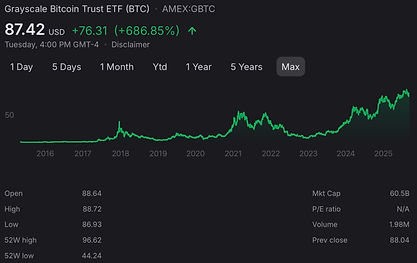
In traditional markets, cryptocurrencies are increasingly integrated through products like ETFs (Exchange-Traded Funds) and trusts such as Grayscale Bitcoin Trust (GBTC).
ETFs allow investors to gain exposure to cryptocurrencies through traditional brokerage accounts without dealing with wallets or exchanges, providing easier access and regulatory oversight. Grayscale offers trust products backed by actual cryptocurrency holdings, allowing investors to participate in price movements indirectly via shares traded on stock markets. These traditional market instruments have helped bring greater legitimacy, liquidity, and institutional participation to the crypto space, bridging the gap between legacy finance and digital assets
CoinMarketCap
CoinMarketCap is a leading online platform launched in 2013 that aggregates, analyzes, and displays real-time cryptocurrency market data.
It is widely regarded as the most trusted source for tracking prices, market capitalizations, trading volumes, circulating supplies, and trends across thousands of cryptocurrencies and tokens.
Investors, traders, and researchers use CoinMarketCap to monitor individual coins like Bitcoin, Ethereum, and XRP, compare exchanges, check historical price charts, discover new tokens, and assess metrics like market dominance and liquidity.
The platform also provides educational content, portfolio tracking tools, NFT data, and insights into DeFi and blockchain projects, helping both newcomers and professionals navigate the fast-moving crypto market.

CoinGecko
CoinGecko is a major cryptocurrency data aggregator platform that provides real-time and historical price data, trading volumes, market capitalization, and analytics for thousands of cryptocurrencies and tokens.
Launched in 2014, CoinGecko aims to democratize access to crypto information, helping users from casual traders to advanced investors compare coins, exchanges, and market trends in one place.
The platform also features ranking of NFT collections, DeFi project analytics, exchange ratings, a portfolio tracker, and a watchlist tool for users to monitor their crypto holdings.
Data on CoinGecko is collected from a vast number of sources, including both centralized and decentralized exchanges, and their robust methodology ensures transparent and reliable price information.
Additionally, CoinGecko offers a comprehensive API for developers, mobile apps, and educational content to help users better understand the digital asset market.
How To Buy Crypto
To buy cryptocurrency, the first step is choosing a trusted exchange such as our partners TradingNetLive, Coinbase, XpHold, KuCoin, and others. These platforms let you create an account, verify your identity, and deposit funds through bank transfer, debit card, or credit card.
Once funded, you can purchase popular cryptocurrencies like Bitcoin, Ethereum, or XRP with just a few clicks. After buying, it’s best to transfer your assets to a secure wallet—preferably a hardware wallet such as Ledger or Trezor—to protect them from hacks.
Many of our partners also provide beginner-friendly mobile apps and portfolio tracking tools to make managing your investments simple. Always follow security best practices like enabling two-factor authentication (2FA) and never invest more than you can afford to lose. With these tools and safeguards, buying and holding cryptocurrency becomes a safe, straightforward, and accessible process for both beginners and experienced traders.
Transaction Time
BITCOIN
~7 transactions per second (tps)
Average confirmation time 10 minutes per block
ETHEREUM
~15–30 transactions per second (tps)
Average confirmation time 12 seconds per block
XRP
~1,500 transactions per second (tps)
Average confirmation time 3–5 seconds
Crypto Generations
First-generation cryptocurrencies began with Bitcoin in 2009, introducing a decentralized monetary system designed for peer-to-peer payments and value transfer. Using proof-of-work consensus, these blockchains are secure and censorship-resistant but limited by slow transaction speeds, high energy use, and lack of programmability.
Second-generation cryptocurrencies expanded blockchain’s potential by adding smart contracts and decentralized applications (dApps). Leading this wave, Ethereum enabled programmable transactions that power DeFi, NFTs, gaming, and more. However, these networks face scalability issues and high fees as demand grows. XRP also represents a transitional phase in this generation, focusing on fast, low-cost cross-border payments and bank integration, though with more centralized features than Bitcoin or Ethereum.
Third-generation cryptocurrencies—including Cardano, Polkadot, Solana, and Avalanche—aim to overcome these limitations by prioritizing scalability, interoperability, sustainability, and governance. They can process thousands of transactions per second at low cost, use energy-efficient proof-of-stake consensus, enable cross-chain communication, and integrate on-chain governance for upgrades. These platforms support advanced smart contracts and Web3 applications, positioning themselves as the foundation for a fully scalable and connected decentralized ecosystem.
In this evolution, XRP served as a bridge between second- and third-generation features by accelerating global finance adoption, while true third-generation blockchains seek to deliver speed, connectivity, and sustainable innovation on a global scale.
ISO 20022
ISO 20022 is an international messaging standard transforming the way financial systems communicate by ensuring data is structured, rich, and easily interpreted between institutions. This standard is being embraced by several leading cryptocurrencies to enhance interoperability and streamline their integration with mainstream financial systems.
Coins such as XRP (Ripple), Stellar (XLM), Quant (QNT), Algorand (ALGO), Cardano (ADA), Hedera Hashgraph (HBAR), IOTA (MIOTA), and XDC Network have adopted ISO 20022 principles, making them attractive for cross-border payments, trade finance, and enterprise applications. By supporting ISO 20022, these crypto platforms help bridge blockchain with traditional banking, promote faster and cheaper transactions, and facilitate regulatory compliance and real-time monitoring.
The adoption of ISO 20022 positions these cryptocurrencies at the forefront of financial innovation, enabling them to interact seamlessly with banks, payment networks, and digital asset infrastructure as the financial industry moves toward universal data standards.
RWA - Real World Asset
Real World Assets (RWA) in crypto refer to the process of tokenizing physical or traditional financial assets like real estate, bonds, commodities (gold, oil), invoices, or even U.S. Treasuries onto a blockchain.
Tokenization means creating a digital token that represents ownership or a share of that real-world asset. For example, instead of buying an entire building, investors could buy fractions of a tokenized real estate asset on a blockchain.
The benefit of RWAs is that they bring liquidity, transparency, and accessibility to markets that are usually expensive or hard to enter. On-chain RWAs allow 24/7 trading, faster settlement, and the ability for people worldwide to invest in assets previously limited to big institutions.
In 2024–2025, tokenized U.S. Treasury bonds became one of the fastest-growing RWA markets, as institutions sought yield opportunities on blockchain.
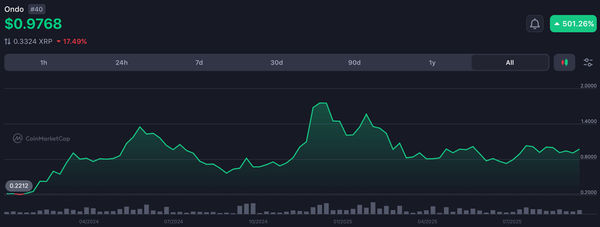
Ondo Finance (ONDO) is one of the leading projects in the Real-World Asset (RWA) space, focused on bringing traditional financial products like U.S. Treasuries onto the blockchain through tokenization. Its flagship products include USDY, a tokenized note backed by short-term Treasuries and bank deposits, and OUSG, a token tied to U.S. government bonds, which recently expanded into Europe and other markets.
Ondo’s growth has been rapid, with its Total Value Locked (TVL) surpassing $1 billion and daily trading volumes often exceeding $300 million, making it one of the most active RWA platforms. In February 2025, Ondo launched Ondo Chain, a layer-1 blockchain designed for institutional-grade tokenization, secured by permissioned validators such as Franklin Templeton, Google Cloud, and ABN AMRO. The ONDO token serves as the project’s governance asset, with a recent unlock bringing nearly 20% of the supply into circulation.
Ondo has also been expanding partnerships, launching OUSG tokens on the XRP Ledger to enable 24/7 minting and redemption, and forming the Global Market Alliance (GMA) with partners like the Solana Foundation, Rainbow, and Trust Wallet to set standards for tokenized securities. Importantly, Ondo also leverages BlackRock’s U.S. Treasury ETF (SHV) as the core asset backing OUSG, tying the project directly to the world’s largest asset manager and boosting its institutional credibility.
Backed by strategic acquisitions, major partnerships, and adoption by banks and governments, Ondo has positioned itself as a pioneer in bridging traditional finance with blockchain, driving forward the RWA market that has already grown to over $10 billion in TVL.

Crypto Market
Total Volume
Trading volume shows how much money is flowing in and out of cryptocurrencies every day, and it’s one of the best ways to measure activity and liquidity. For example, as of September 2025, the global crypto market sees over $250–300 billion traded daily, with Bitcoin alone often handling $25–40 billion in 24 hours, while Ethereum averages around $10–15 billion.
As of September 2025, the global cryptocurrency market is valued at nearly $3.9–4 trillion in total market capitalization, making it the world’s fourth-largest asset class after stocks, bonds, and real estate. Daily trading volumes regularly exceed $250–300 billion, showing how liquid and active the market has become compared to its early years.

Crypto Farming
Crypto farming, also called yield farming or liquidity mining, is a strategy in decentralized finance (DeFi) where users lend or stake their cryptocurrency assets in DeFi platforms to earn rewards.
By providing liquidity to decentralized exchanges or lending protocols, farmers receive interest, fees, or governance tokens as compensation for helping these platforms operate and facilitate transactions.
Yield farming often involves moving assets between platforms to maximize returns, but it carries risks like impermanent loss and smart contract vulnerabilities. It’s a way for crypto holders to generate passive income using their digital assets through various DeFi protocols.
Crypto Staking
Crypto staking is the process of locking up cryptocurrency tokens to support a blockchain network's security and operations, especially those using the Proof of Stake (PoS) consensus mechanism. By staking tokens, users become validators who help verify and validate transactions on the network, and in return, they earn rewards typically more of the staked cryptocurrency.
Staking strengthens network security since validators have a financial incentive to act honestly, as malicious behavior can result in losing their staked tokens (a penalty called slashing). There are various ways to stake, including solo staking, delegated staking, pooled staking, and exchange staking, catering to different levels of user involvement and risk tolerance. Overall, staking offers crypto holders a way to earn passive income while contributing to the blockchain ecosystem's decentralization and efficiency.
Certik
Largest Blockchain Security Auditor
CertiK is a leading blockchain security platform focused on protecting smart contracts, decentralized applications (dApps), and blockchain protocols from vulnerabilities and cyberattacks.
Founded by Yale and Columbia professors, CertiK uses advanced technologies like artificial intelligence, formal verification, and automated security auditing to ensure code reliability and safety.
The CertiK ecosystem includes the CertiK Chain, a Delegated Proof-of-Stake (DPoS) blockchain optimized for secure infrastructure and inter-chain communication.
DEFI - Decentralized Finance
The Future Of Finance
Decentralized Finance, or DeFi, is a financial ecosystem that uses blockchain technology, primarily on platforms like Ethereum, to provide financial services without relying on traditional intermediaries such as banks or brokers.
DeFi operates through smart contracts, which are self-executing contracts with the terms directly written into code, enabling peer-to-peer transactions that are transparent, programmable, and accessible globally.
Exchanges - DEX & CEX
Cryptocurrency exchanges are platforms where users can buy, sell, and trade digital currencies like Bitcoin and Ethereum. There are three main types: centralized, decentralized, and hybrid exchanges.
Centralized exchanges (CEXs) like Coinbase and Binance operate like traditional stock exchanges, acting as intermediaries that hold users' funds and match buy and sell orders. They offer high liquidity, user-friendly interfaces, and regulatory compliance but require users to trust the platform with their assets.
Decentralized exchanges (DEXs), such as Uniswap or PancakeSwap, operate without intermediaries by enabling direct peer-to-peer trades via smart contracts, providing more privacy and control over funds but often with lower liquidity and usability challenges.
Hybrid exchanges combine features of both CEXs and DEXs, offering the security of decentralization alongside the liquidity and speed of centralized platforms. Each type serves different user needs in terms of convenience, security, and control.
Wallets - Hot & Cold
Cryptocurrency wallets generally fall into two categories: hot wallets and cold wallets, distinguished mainly by their internet connectivity. Hot wallets are software-based and remain online, offering convenience and speed for frequent transactions.
They are typically mobile apps, desktop programs, or web platforms such as Coinbase Wallet or MetaMask, enabling users to store, send, and receive cryptocurrencies with ease. However, because they are always connected to the internet, hot wallets are more susceptible to hacking and other cyber threats. Ledger, Trezor, and D'Cent are among the popular hardware wallets used for secure cryptocurrency storage.
Ledger, founded in 2014, is known for its proprietary Secure Element chip that safely stores private keys offline. It supports over 15,000 cryptocurrencies and NFTs, with Bluetooth-enabled models like Nano X and advanced touchscreens on newer devices. Ledger’s Ledger Live app offers a seamless experience for managing assets, staking, and NFT handling. It also provides Ledger Recover, a service to back up recovery phrases securely.
Trezor, launched by SatoshiLabs in 2013, emphasizes transparency with open-source firmware and software. It supports around 1,500 cryptocurrencies and comes in models like Trezor One and Model T, the latter featuring a color touchscreen. Trezor offers advanced security features such as passphrase-enabled hidden wallets, PIN protection, and Shamir Backup, which allows splitting recovery phrases into multiple shares for enhanced security. Unlike Ledger, Trezor does not have Bluetooth but integrates well with third-party wallets.
D'Cent is another hardware wallet that combines biometric security features, like fingerprint recognition, with secure element chips. It supports multiple coins and tokens, and is known for user-friendly mobile app integration, suitable for users seeking a mix of convenience and strong security.
In summary, Ledger is favored for broad coin support and advanced features, Trezor for open-source transparency and privacy capabilities, and D'Cent for combining biometrics with security, catering to different user needs in crypto asset management.
Web 3 & Gaming
Web3 gaming is a new paradigm where blockchain technology empowers players with true ownership, transparency, and control over in-game assets.
Unlike traditional games controlled by centralized servers, Web3 games store assets and collectibles as NFTs, allowing players to own, trade, and use these items across different gaming platforms.
This decentralized approach supports features like play-to-earn, where gamers can earn cryptocurrency or digital assets by participating in the game.
Web3 gaming ecosystems use smart contracts to automate game mechanics, voting, and rewards, ensuring fairness and transparency.
Popular blockchains for Web3 gaming include Ethereum, Solana, and Polkadot, chosen for their scalability and interoperability.
Furthermore, many Web3 games integrate digital wallets enabling seamless transactions and cross-platform asset management.
This shift is reshaping the industry by creating player-driven economies, reducing downtime, and enabling innovative gameplay and financial opportunities.

NFT - Non-Fungible Token
A Non-Fungible Token (NFT) is a unique digital asset stored on a blockchain that certifies ownership and authenticity of a specific item, which can be digital or physical. Unlike cryptocurrencies such as Bitcoin, NFTs are not interchangeable because each has distinct attributes and value.
NFTs can represent digital art, music, collectibles, virtual real estate, in-game items, or even real-world assets like real estate deeds or concert tickets. The uniqueness and ownership details are secured by blockchain technology, enabling users to buy, sell, or trade these tokens securely and transparently.
While owning an NFT proves possession of the token, it does not inherently grant copyright or intellectual property rights to the underlying asset. NFTs have expanded beyond collectibles into broader applications like identity verification, digital rights management, and decentralized finance.
Crypto Mining
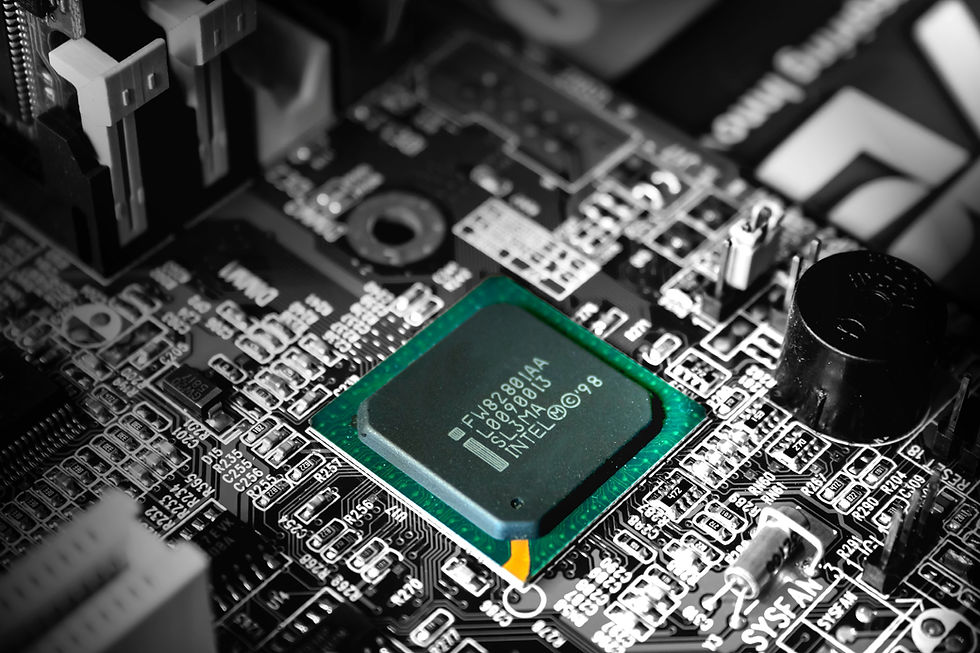
Cryptocurrency mining requires substantial computing power and energy, primarily because miners compete to solve complex mathematical puzzles to validate blockchain transactions.
Bitcoin mining, the most energy-intensive, uses specialized hardware called ASICs (Application-Specific Integrated Circuits) that consume large amounts of electricity.
Globally, Bitcoin mining alone uses an estimated 110 to 130 terawatt-hours (TWh) of electricity annually, comparable to the energy consumption of some medium-sized countries.
The energy demand stems from both the high computational effort and cooling systems needed to keep mining rigs operational.
The environmental impact has sparked debates, encouraging some miners to use renewable energy sources or migrate to less energy-intensive consensus mechanisms like Proof of Stake (used by other cryptocurrencies).
Despite advancements in hardware efficiency and shifting energy sources, crypto mining remains a significant energy consumer, raising concerns about sustainability and carbon footprint in the broader push for greener technology.
Please Note: The cryptocurrency information provided by TradingNetLive is for educational and informational purposes only. All examples, figures, and statistics are subject to change and may not reflect the most current market data.
Cryptocurrency trading is highly volatile and speculative, and prices can fluctuate rapidly. Nothing on this page should be considered financial, investment, or legal advice.
Users are encouraged to conduct their own research and consult a qualified professional before making any investment or trading decisions. Past performance does not guarantee future results.